Frank was first diagnosed with follicular lymphoma at age 59. When his slow-growing cancer transformed into the more aggressive large B-cell lymphoma, his care needs changed dramatically. He went from not requiring immediate treatment to needing a complex regimen of chemotherapy and other drugs called EPOCH-R. Each cycle involved a 96-hour infusion, a five-day inpatient stay and 16 days of recovery.
He had completed five treatment cycles and logged 20 days in hospital. Through the pilot project, he could get his last round of treatment from the comfort of his own home. He volunteered on the spot.

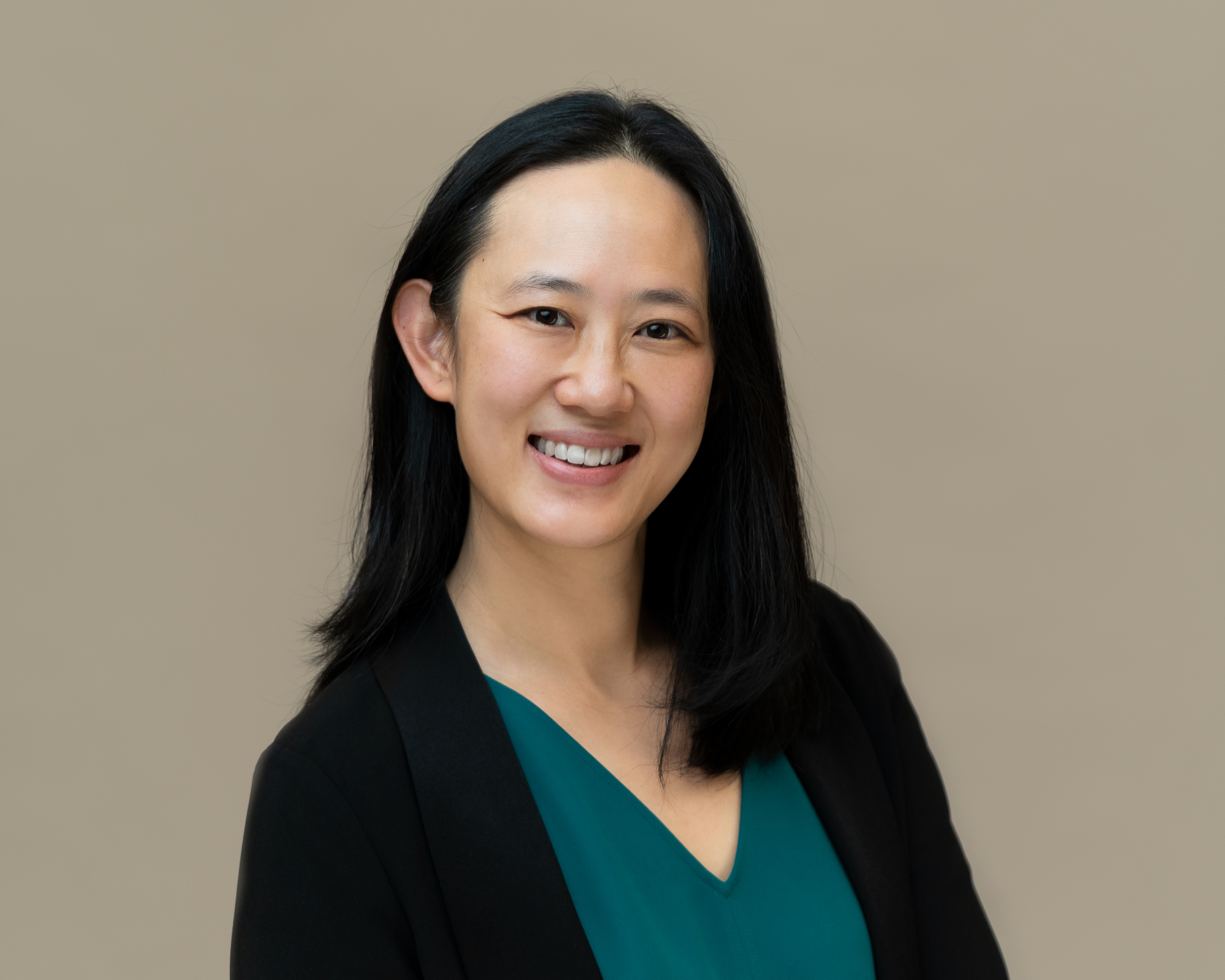
Pictured: Dr. Alina Gerry, hematologist, BC Cancer – Vancouver
“Often, patients who get this type of cancer are in their 20s through 50's," said Dr. Alina Gerrie, a hematologist at BC Cancer – Vancouver and the physician lead on the working group that launched the two-phase pilot project. “They're in a busy stage of life where they're juggling work, family and now intensive cancer treatment. What we consistently heard from patients was that one of the hardest parts of their cancer treatment wasn't the chemotherapy itself, but having to be away from home and separated from the people and supports they rely on to get through it."
The multidisciplinary working group, that included medical staff, clinicians, pharmacists and project managers, came together with the goal of bringing care closer to home for the Vancouver centre patients who required EPOCH-R and those from BC who needed to travel to the city for this treatment. By replicating the success other provinces have had in introducing take-home EPOCH-R treatment, they knew they could not only improve the experiences of their patients but also free up capacity in Vancouver's small in-patient unit for new clinical trials and other complex treatment.
“Delivering the same effective, safe, and high-quality treatment in an outpatient setting not only enhanced patient care but also expanded clinical capacity – helping to ensure that our inpatient beds are there for those who truly need them," says Charissa Chiu, clinical nurse specialist. “This change is a win for patients, families and the health care system."
Pictured: Charissa Chiu, clinical nurse specialist, BC Cancer – Vancouver
Frank was the first patient treated through the pilot project. He was sent home with a CADD pump – short for Continuous Ambulatory Delivery Device – a small portable machine that delivers medicine intravenously slowly and steadily over long periods of time. It was the first time this device was used at BC Cancer for at-home chemotherapy delivery. He had to return to Vancouver centre daily for a quick assessment from a nurse and to have his medication bag changed.
Frank's two kids were so excited he would be home with them while undergoing treatment, they nicknamed his IV pump FRAMP – a playful mix of Frank and pump – and created its own logo that combined a heart and an IV pump.
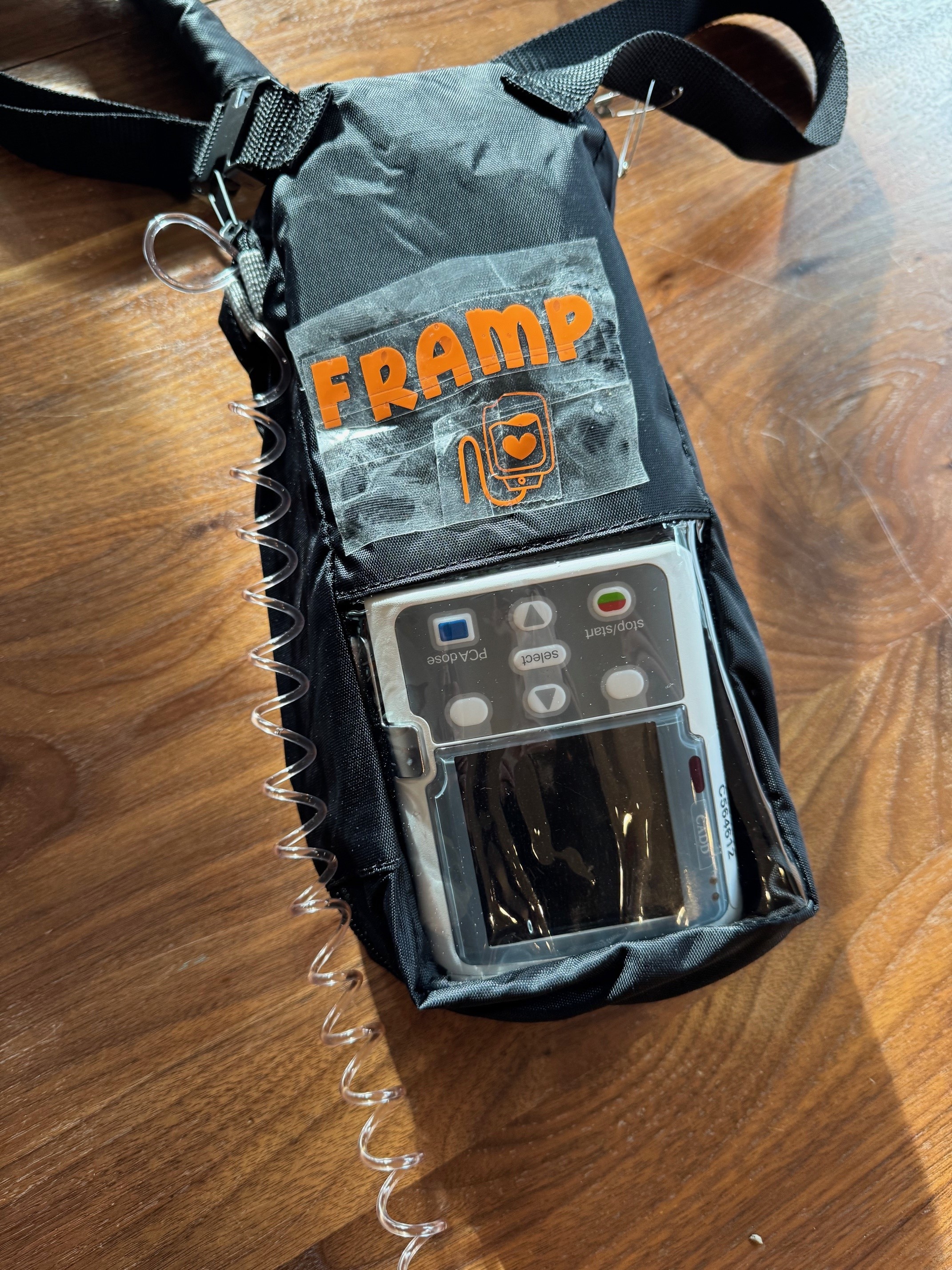
Pictured: FRAMP with the custom sticker and logo created by Frank's kids.
Every patient in the pilot study reported that they preferred receiving treatment at home and that both they and their families felt comfortable and confident with this approach.
For his first five treatments, when Frank alternated between hospital stays and time at home, he dealt with symptoms such as fatigue, hair loss, anxiety, and mouth sores but said the toughest part was being away from his family.
“It was really hard not being there in the evenings for dinner or in the mornings when they woke up. I couldn't take them to school, help with homework, or watch the Canucks play together — all the usual things," says Frank. “It meant so much to just be home and be part of their lives."
Now available at BC Cancer's Abbotsford, Kelowna, Surrey and Victoria centres, this treatment is expected to benefit more than 35 patients a year. To date, this work has enabled more than 24 patients to receive this treatment at home. For these patients, this adds up to 720 nights in their own beds rather than a hospital.
The working group credits the success of the project to the many clinicians who support this work including Team 1 Lymphoma Nurses from the Ambulatory Care Unit, inpatient Nurses and the ACCU team.
“It was a true example of how we can collectively improve the experiences of our patients when we offer and deliver care closer to home through change in practice at our centres," says Janice Dirksen, clinical nurse leader, BC Cancer – Vancouver. “It was amazing to see everyone come together, demonstrating the Coast Salish teaching of Nuts a maht (we are one) so we could be Eyhh slaxin (good medicine) for people with cancer in our province."
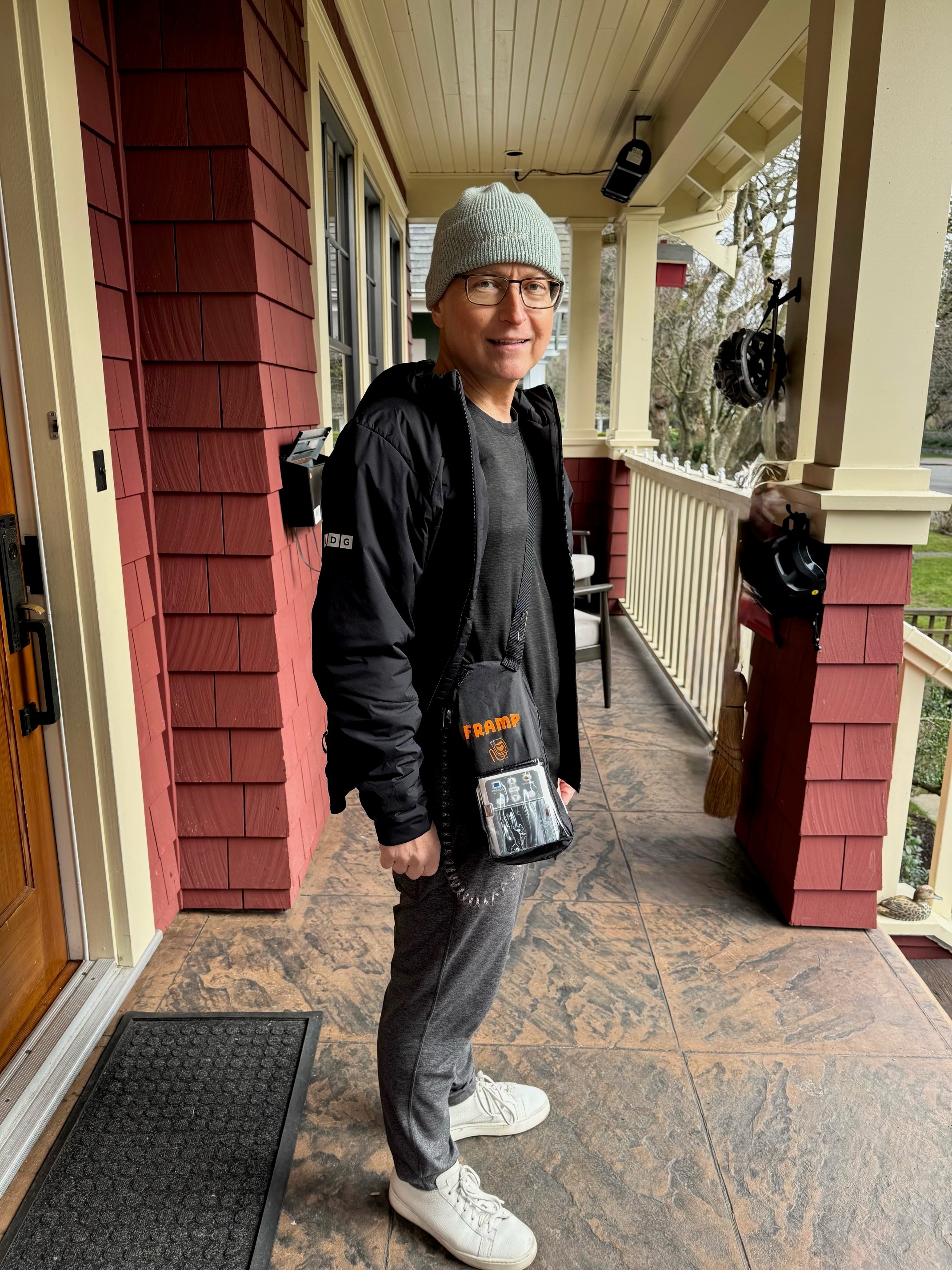
Pictured: Frank ready for his daily walk
Many patients will describe their cancer journey as a marathon. For Frank it was many marathons. Literally.
Prior to staring cancer treatment, Frank's weeks were filled with going to the gym, tennis and cycling. So when he found himself cooped up in BC Cancer – Vancouver's small inpatient unit, he set an ambitious goal: walk a marathon – 42 km – during each hospital stay. Each day he was admitted, he'd walked the unit's figure eight-shaped hallways until he logged about 10 km.
When his treatment moved home, he kept the tradition alive — this time walking through his neighborhood streets.
“It was better than looping the same corridor 85 times a day," Frank says. “The staff at BC Cancer – Vancouver were phenomenal, without exception. But it's still much nicer to be home."