Cancer is the leading cause of death in Canada, but an estimated four in 10 cancer cases are preventable through healthy behaviours and supportive policies. A new joint report from BC Cancer and BC Centre for Disease Control looks at what's driving cancer risk in BC and where prevention efforts can have the greatest impact.
Aligned with BC's 10-Year Cancer Action Plan, the Cancer Prevention Indicator Report takes a comprehensive approach, exploring common cancer risk factors, such as ultraviolet (UV) radiation, commercial tobacco and alcohol use, through a health equity lens.
“Cancer prevention isn't just about individuals making healthier choices," says Dr. Jia Hu, public health physician and medical lead of the prevention and health promotion team at BCCDC. “It's about creating environments and policies where those choices are supported."
The report focuses on eight key risk factors: commercial tobacco use, UV radiation, physical inactivity, nutrition, alcohol, infections, occupational exposures, and environmental exposures.
Where possible, the data is further stratified by age, sex, income, education, and health authority to help uncover any inequities.
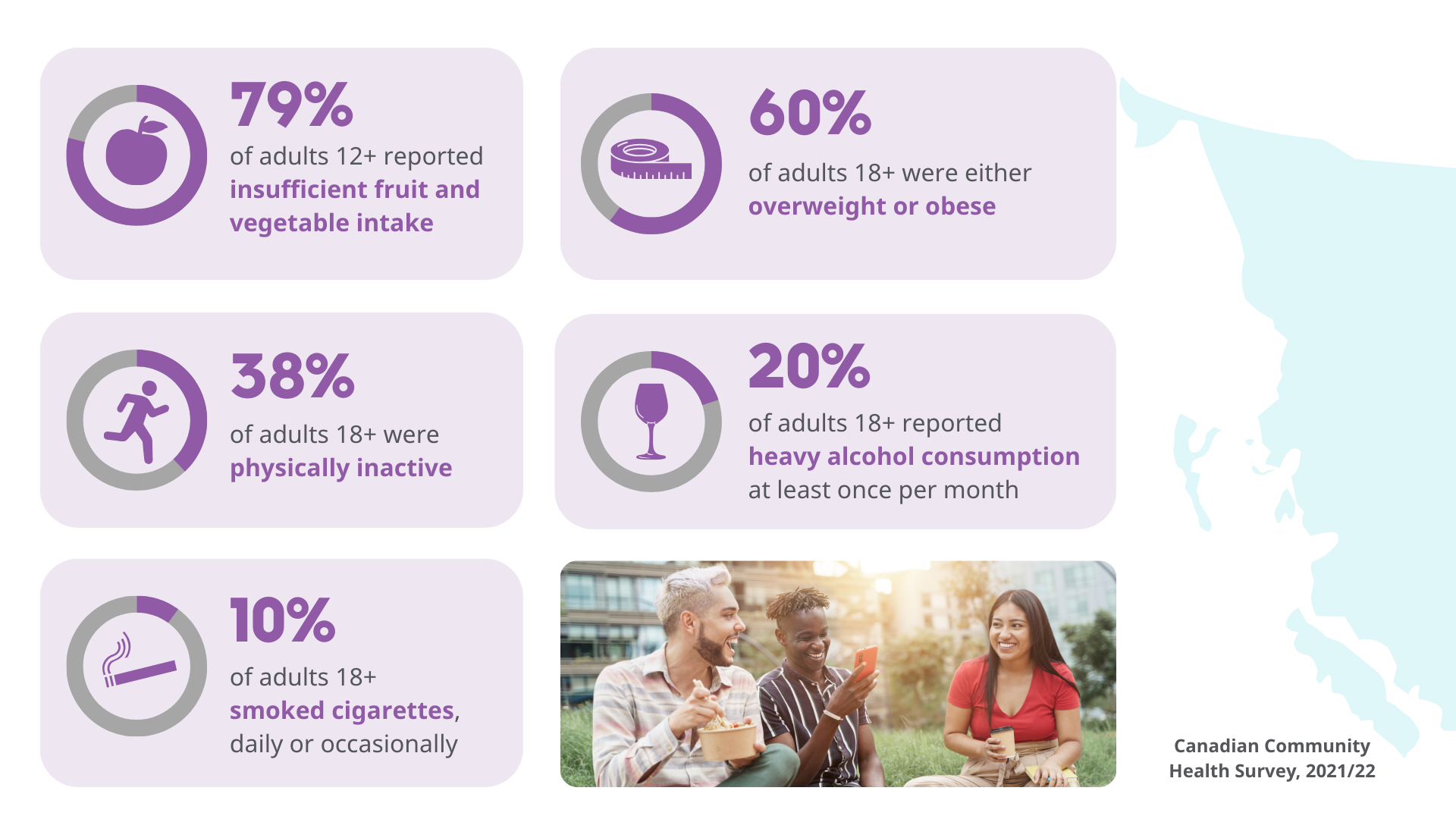
- Commercial tobacco use remains higher in Northern and Interior regions, and among people with lower incomes, less education and mental health and/or substance use challenges. Tobacco use continues to be the leading risk factor for lung cancer in BC.
- Fruit and vegetable consumption continues to decline. In 2021, only 21% of adults and 22% of youth (12-17 years) met the recommended minimum of five servings per day.
- Nearly 19% of BC households experienced moderate or severe food insecurity in 2023, with disproportionate impacts among equity-deserving groups, particularly Black and Indigenous people, lower income households, families with children, female lone-parent families, and new immigrants.
- Nearly 50% of British Columbians exceed the low-risk drinking level of two standard drinks per week, with per capita alcohol consumption highest in the Interior and Northern regions.
- Occupational exposures to carcinogens are most common in construction, transportation and warehousing, and manufacturing, where exposure to solar UV radiation, crystalline silica, engine exhausts and other carcinogens is common.
According to Dr. Hu, data-driven insights like these can help guide where action is most needed.
“This kind of information helps us focus prevention efforts where they can have the biggest impact," he says. “It shows which populations and regions might face higher risks, and where additional support is needed."
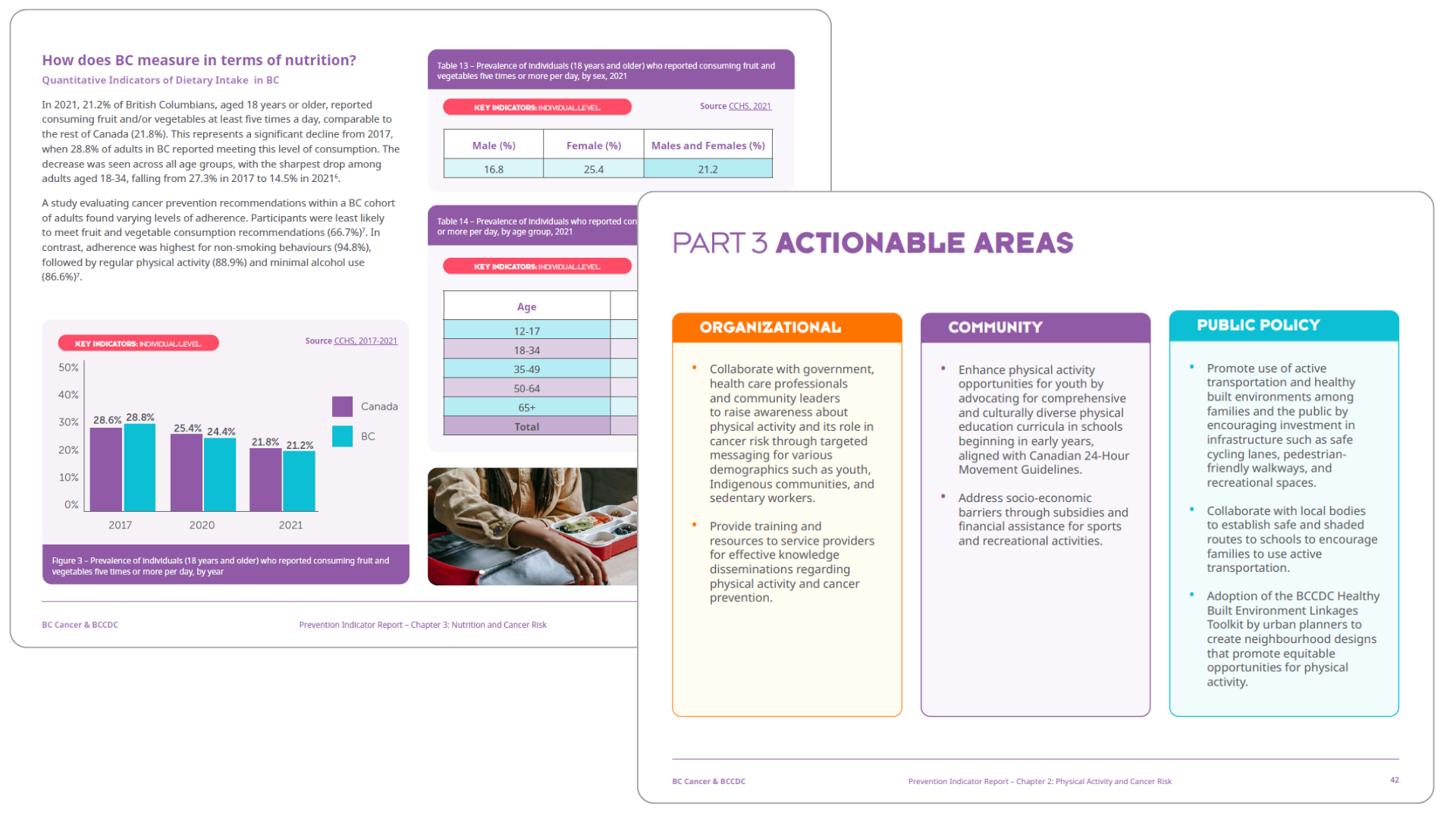
The report points to a range of opportunities to reduce cancer risk, from improving access to affordable, healthy food and designing communities that support physical activity, to strengthening alcohol policies and occupational exposure limits.
Reducing cancer risk requires action across many sectors. As the report notes, policymakers, health care providers, community leaders, and organizations all play an important role.
“As new data becomes available, future editions of this report will provide an even clearer picture of trends," says Fabio Feldman, executive director, Prevention, Screening, and Hereditary Cancer Program.
“Cancer prevention is a long-term investment," adds Feldman. “But the payoff is worth it: healthier communities, fewer cancer diagnoses, and lives saved."
Read the full report:
https://www.bccancer.bc.ca/prevention/about/indicator-report
Commercial tobacco
Commercial tobacco use remains the leading preventable cause of cancer in British Columbia, accounting for 27.7% of cancer cases in 2015, including lung, bladder, and oral cancers. Lung cancer, still the leading cause of cancer death in BC, is largely driven by tobacco use. However, risk of developing lung cancer due to radon is even higher for people who smoke tobacco. While current smoking prevalence in BC has declined to 9.5% in 2022 (from 11.1% in 2019), it remains disproportionately high among certain groups.
Physical activity
In 2015, physical inactivity and sedentary behaviour contributed to an estimated 8.4% and 6.5% of cancer cases in BC, respectively, and are linked to cancers such as colorectal, endometrial, breast, liver, bladder, and stomach. While BC leads the nation in physical activity rates, nearly four in 10 adults and nearly half of youth do not meet the recommended movement guidelines (150 minutes of moderate-to-vigorous aerobic physical activity per week for adults, and 60 minutes per day for youth). Physical activity levels vary widely across the population, with lower participation among women, older adults, and people with lower household income and education levels.
Nutrition
Dietary risk factors for cancer include low fruit and vegetable intake, red meat and high processed food consumption, and excess weight. In 2015, 7.5% of cancers in BC were attributable to low fruit consumption, 5.6% to red meat consumption, 3.9% to low vegetable consumption, 3.7% to processed meat consumption, and 7.3% to excess weight (measured by high waist circumference). Cancers linked to these risk factors include lung, esophageal, colorectal, pancreatic, and stomach, among others. Approximately 60% of BC adults and 31% of youth (12-17 years) were classified as overweight or obese in 2022. Gaps in healthy eating persist, with some populations struggling to meet dietary guidelines or access to nutritious foods. Cost of living and food insecurity present significant barriers for many households.
Alcohol
In 2015, alcohol consumption contributed to 5.3% of cancer cases in BC (5.1% in Canada), affecting sites such as the oral cavity, liver, breast, colon and esophagus. While overall alcohol consumption has declined slightly since the COVID-19 pandemic, British Columbians consumed an average of 9.2 standard drinks per week in 2023, which is about 50% more than the levels associated with moderate cancer risk under Canada's Guidance on Alcohol and Health, and higher than the national average of 8.7 drinks per week. Public awareness of the link between alcohol and cancer remains low, with 35% of Canadians unaware of drinking guidelines, particularly among youth aged 16-19 (40%).
Ultraviolet radiation
UV radiation is a significant risk factor for skin cancer, contributing to more than half (54%) of melanoma cases in BC (62.3% in Canada). Despite this, sun protection behaviours remain low; fewer than one in three adults regularly wear protective clothing, such as hats or long sleeves, and most report spending two or more hours in the sun on a typical summer day. UV exposure is also a significant occupational hazard, with an estimated 238,000 British Columbians exposed to solar radiation at work.
Environmental exposures
Environmental exposures, including radon and outdoor air pollution, both contribute to lung cancer risk. In 2015, radon accounted for 4.4% of lung cancer cases (compared to 6.9% nationally), while outdoor air pollution was linked to 6% of lung cancer cases (also 6.9% nationally). Elevated radon levels can be found throughout the province but are more common in the Interior and the North, where geological factors contribute to higher concentrations. An estimated 33% of homes in the Interior and 22% of homes in the Northern region had radon concentrations above the Canadian guideline of 200 Bq/m³.
Occupational exposures
In 2016, approximately 1.3 million workers in BC were exposed to at least one known or suspected carcinogen, with about 1.1 million exposed to the most common ones, including: UV radiation, night shift work, gasoline and diesel engine exhausts, polycyclic aromatic hydrocarbons (PAHs), crystalline silica, wood dust, second-hand smoke, benzene, and welding fumes. These exposures are most common in industries such as construction, transportation, warehousing, manufacturing, and agriculture. An estimated 1,030 cancer cases in BC in 2011 were due to occupational exposures, including mesothelioma, lung, skin, breast, and bladder cancers.
Infections
In 2015, infections such as human papillomavirus (HPV) and hepatitis B accounted for approximately 3.7% of cancer cases among adults in Canada. HPV is linked to nearly all cervical cancers and several other cancers, including anal, vaginal, vulvar, and oropharyngeal cancers. At the end of the 2023/24 school year, 64.6% of female and 62.5% of male students in grade 6 received at least two doses of the HPV vaccine, an overall increase in coverage rates from both 2023 and 2022. When including students who received at least one dose, coverage rises to 76.5% for females and 74.3% for males, with coverage varying by region.Hepatitis B accounted for 8.8% of liver cancer cases in Canada in 2015. BC faces additional challenges with hepatitis B rates (16.2 per 100,000 in 2021) nearly double the national average (8.9 per 100,000), making it the second highest among all provinces and territories. Hepatitis B coverage at the provincial level has decreased from 89.8% in 2022 to 88.3% in 2024.